10/4/2025
 Author: NeuroFace
Facial nerve palsy is one of the most common disorders of facial expression that affects appearance and daily functioning. The two most frequent causes of sudden weakness of the facial muscles are Bell’s palsy and Ramsay Hunt syndrome. Although both conditions lead to unilateral facial nerve palsy, they differ in cause, symptoms, and prognosis. Knowing these differences helps recognize the threat more quickly and contact a doctor at the right time. The article below simply explains the key features of both conditions, indicates when urgent specialist care is needed, and describes how the NeuroFace app can support rehabilitation.
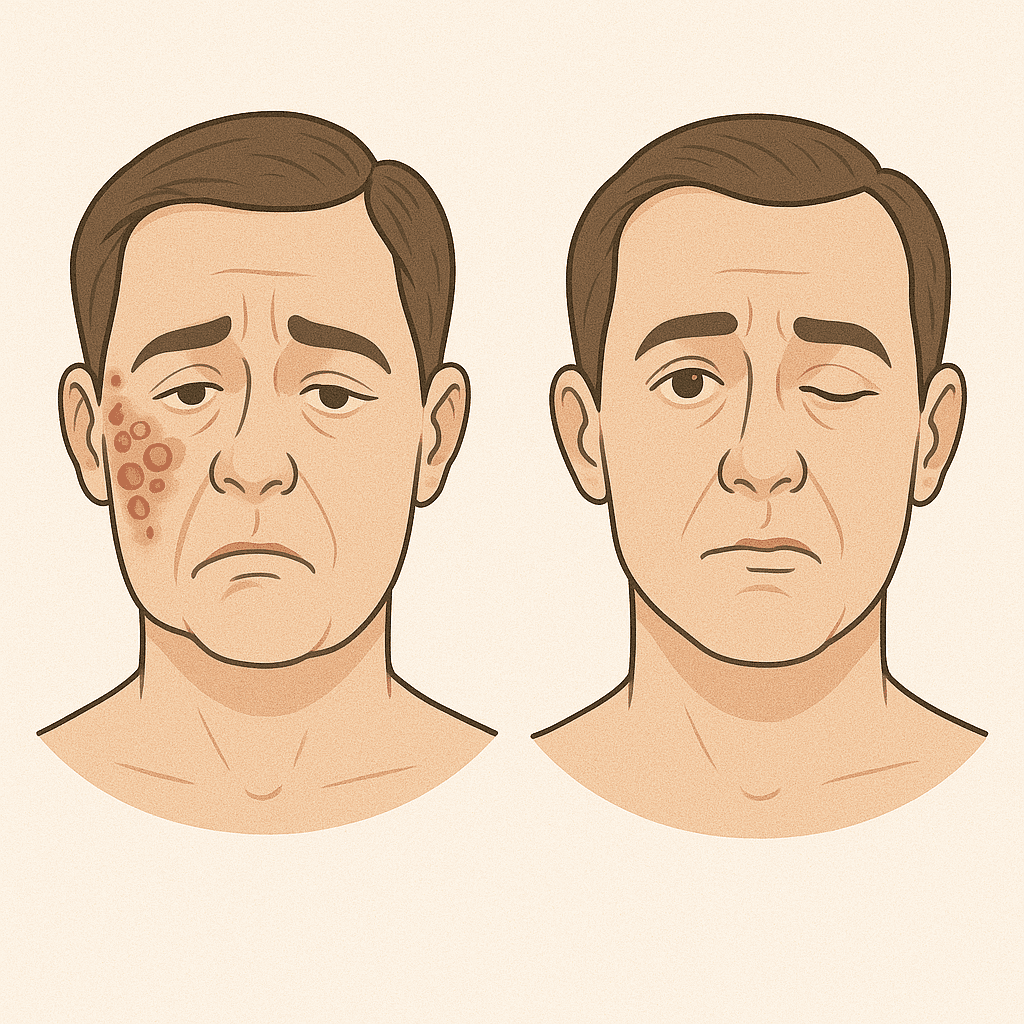
Bell’s palsy is a condition in which there is a sudden weakness or paralysis of the facial expression muscles on one side of the face. The cause is inflammation and swelling of the seventh cranial nerve, i.e., the facial nerve. The exact mechanism of the disease is not fully understood, but viral infections (e.g., herpes simplex virus), autoimmune diseases, and stress are believed to play a role. Main symptoms include:
Bell’s palsy is usually not dangerous. In most people the symptoms resolve spontaneously within several months. Nevertheless, sudden weakness of one side of the face always requires medical consultation because a similar picture can occur in a stroke. A doctor may order tests to exclude other diseases and initiate anti-inflammatory (steroids) or analgesic treatment.
Ramsay Hunt syndrome (RHS) is a rare condition caused by reactivation of the varicella-zoster virus (chickenpox/shingles). After a chickenpox infection the virus remains dormant in nerve ganglia, and later reactivation in the region of the facial nerve can cause paralysis and pain. The classic triad of symptoms consists of:
Additionally, other symptoms may occur such as hearing loss, tinnitus, dizziness (vertigo), hyperacusis, and taste disturbances. In some patients the rash may not appear at all — this variant is called zoster sine herpete and can be difficult to distinguish from Bell’s palsy. RHS is more serious than Bell’s palsy; only about 70% of patients regain full function, whereas in Bell’s palsy over 90% of people return to normal facial expression.
Although both conditions lead to a similar sign — sudden paralysis of the facial muscles — there are important differences. They are presented below in a clear form.
Sudden weakness of one side of the face always requires prompt medical consultation because it may be a symptom of stroke, which is a direct life threat. The Cleveland Clinic emphasizes that Bell’s palsy symptoms are similar to stroke symptoms, so immediate examination is necessary. In Ramsay Hunt syndrome rapid initiation of treatment is crucial — Banner Health notes that administering antiviral drugs and steroids within 72 hours of symptom onset significantly increases the chance of full recovery. In practice you should see a doctor immediately if you experience:
“RHS can cause serious and long-lasting problems if not treated quickly. Treatment within three days of symptom onset provides the greatest benefit,” emphasizes Dr. Heather Coffman, an otolaryngologist at Banner-University Medicine.
Diagnosis of both diseases is based on clinical examination: the doctor assesses facial expression, checks for the presence of rash or ear pain, and reviews the medical history. Additional tests such as electromyography (EMG) or imaging studies (MRI) may be necessary to exclude other causes of facial nerve palsy. Treatment includes:
The NeuroFace app was created to support people with facial nerve palsy in rehabilitation. Thanks to a simple mobile interface:
NeuroFace does not replace a medical visit, but it can be a valuable complement to professional rehabilitation. Our goal is to make daily work on facial expression easier for patients and provide motivation for regular exercises.
Bell’s palsy and Ramsay Hunt syndrome are two different causes of unilateral facial paralysis. Bell’s palsy is usually transient and not dangerous, and its cause often remains unknown. Ramsay Hunt results from reactivation of the varicella-zoster virus and is characterized by ear pain and rash, with a worse prognosis. In both cases prompt medical attention is crucial to exclude stroke and to start treatment as soon as possible. The best outcomes are achieved with early pharmacological therapy, eye protection and regular rehabilitation. The NeuroFace app can help with daily facial exercise, but contact with a physician and physiotherapist remains the most important element.
Sources
You'll be the first to know and one of our earliest testers.
Practical guide for patients with facial nerve paralysis